Jaw crusher vs cone crusher: which one does your plant need?
Jaw and cone crushers do different jobs in a crushing circuit. Here is how they work, where each one fits and the questions to ask before you choose.
, 2 min read
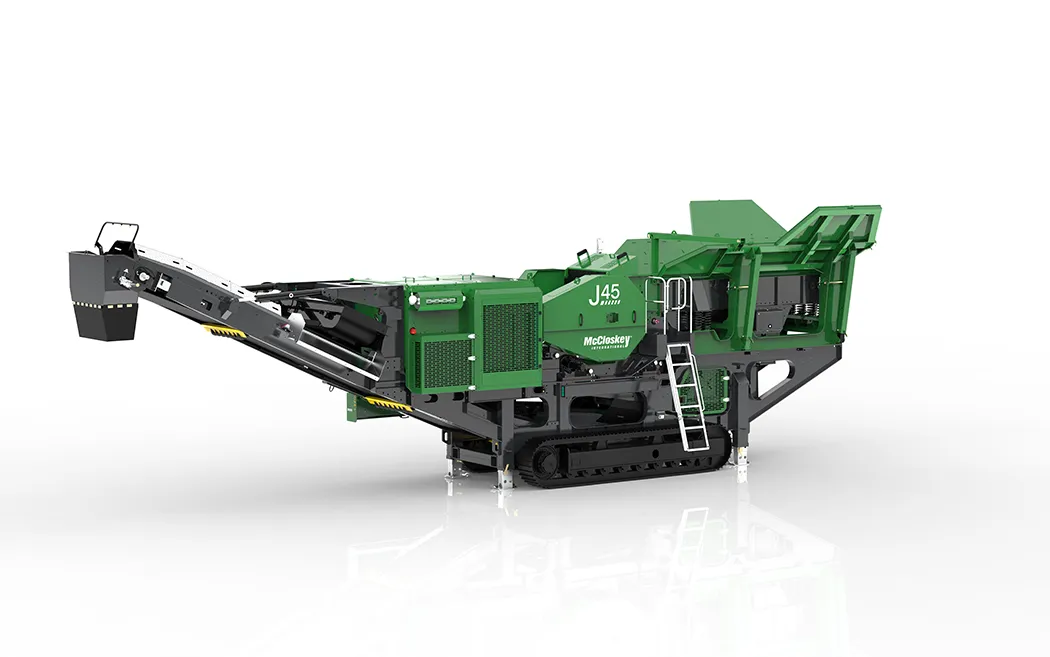
Most aggregate plants use more than one crusher. Rock is reduced in stages, and each stage uses the machine best suited to the size and hardness of the material it receives. Jaw crushers and cone crushers are the two machines most buyers compare first, but they are rarely alternatives to each other. They usually work together.
How a jaw crusher works
A jaw crusher squeezes rock between a fixed jaw and a moving jaw. The gap narrows towards the bottom, so material is crushed repeatedly as it travels down until it is small enough to pass through the closed side setting (CSS) at the discharge.
- Accepts large, blocky feed straight from blasting or excavation
- Handles hard and abrasive rock such as granite and basalt
- Simple, robust design with relatively low operating cost
- Produces a coarser, less cubical product than later stages
That is why the jaw crusher is the usual primary crusher: the first machine after the feeder and grizzly.
How a cone crusher works
A cone crusher crushes rock between a gyrating mantle and a fixed concave liner. Material is compressed many times as it moves down the crushing chamber, which gives a finer and more consistent product.
- Takes pre-crushed feed, typically the output of a jaw crusher
- Produces well-shaped, cubical aggregate for concrete and asphalt
- Adjustable setting for different product sizes
- Higher wear-part cost per tonne in very abrasive rock, but excellent product control
Cone crushers are used as secondary and tertiary crushers, after the jaw.
Which one do you need?
Start from what you are crushing and what you need to sell, not from the machine:
- Feed size: if your largest boulders are bigger than about 300 mm, you need a primary jaw crusher first.
- Material: very hard, abrasive rock favours compression crushing (jaw and cone). Softer, less abrasive rock such as limestone can also be processed with impact crushers.
- Final product: road base and fill may only need a jaw and a screen. Concrete aggregate and manufactured sand need secondary and tertiary stages for shape.
- Output: the required tonnes per hour decides machine size and how many stages you need.
- Site and mobility: tracked mobile units suit quarries that move or contracts that change sites; stationary plants suit long-life quarries.
A typical aggregate circuit
A common arrangement is a jaw crusher as primary, a cone crusher as secondary, and a screen that sends oversize back to the cone (closed circuit). For sand production a tertiary cone or a vertical shaft impactor is added, often followed by washing.
Before you decide
Share a sample description of your rock, your largest feed size, the products you need and the tonnage you are targeting. With that information an application engineer can propose a circuit and compare options properly. Contact us and we will help you work through it.
Tell us what your project needs
Share your requirement and we will come back with the right equipment, rental terms or a site visit.